
How to Stop Itchy Braids: Causes, Prevention & Scalp Care Tips
Braids are one of the most popular protective hairstyles, but many people experience an itchy scalp only a few days after getting their hair braided. The discomfort can range from mild irritation to persistent itching that makes wearing braids frustrating.
The good news is that itchy braids are usually preventable. In many cases, the problem is not the braids themselves but factors such as scalp dryness, product buildup, tension, or an improper hair care routine.
Whether you wear Box Braids, Knotless Braids, Cornrows, Twists, or Locs, understanding why your scalp becomes itchy can help you prevent discomfort while keeping both your hair and scalp healthy.
In this guide, you’ll learn the most common causes of itchy braids, practical ways to relieve irritation, and professional scalp care tips that help keep protective hairstyles comfortable and fresh.
Why Do Braids Make Your Scalp Itch?
Many people assume that itching is simply part of wearing braids. In reality, itching is often a sign that the scalp needs attention. Dry skin, tight braiding techniques, product buildup, or lack of moisture are among the most common reasons.
A healthy scalp should feel comfortable throughout the time you wear protective hairstyles. When the scalp is properly moisturized and cared for, irritation is often reduced and braids remain more enjoyable to wear.
Professional Tip
An itchy scalp is often easier to prevent than to treat. A simple scalp care routine can make a significant difference in comfort while wearing braids.
The Most Common Causes of Itchy Braids
Several factors can contribute to scalp irritation after getting braids. Identifying the cause is the first step toward choosing the right solution.
- Dry scalp caused by lack of moisture.
- Excessive tension during braid installation.
- Product buildup on the scalp.
- Sensitivity to certain hair products.
- Not cleansing the scalp regularly.
- Environmental factors such as heat and sweat.
Most cases of braid itch can be improved with gentle scalp care, lightweight moisturizing products, and a consistent maintenance routine.
How to Relieve an Itchy Scalp While Wearing Braids
The best way to reduce braid itch is to treat the cause rather than simply trying to stop the itching. A healthy scalp needs hydration, regular cleansing, and lightweight products that nourish without creating buildup.
Simple daily habits can make a noticeable difference in both comfort and the overall appearance of your protective hairstyle.
| Common Cause | Recommended Solution |
|---|---|
| Dry scalp | Use a lightweight moisturizing scalp oil. |
| Product buildup | Clean the scalp gently on a regular basis. |
| Tight braids | Reduce tension and avoid pulling the scalp. |
| Lack of hydration | Keep both the scalp and natural hair moisturized. |
| Nighttime friction | Sleep with a satin bonnet or silk scarf. |
Build a Healthy Scalp Care Routine
A consistent scalp care routine is one of the most effective ways to prevent itching while wearing protective hairstyles. Instead of waiting until irritation appears, regular care helps maintain a balanced, comfortable scalp from the beginning.
1. Moisturize Your Scalp
Keeping the scalp hydrated is essential for reducing dryness and discomfort. Lightweight formulas are ideal because they nourish the scalp without leaving heavy residue.
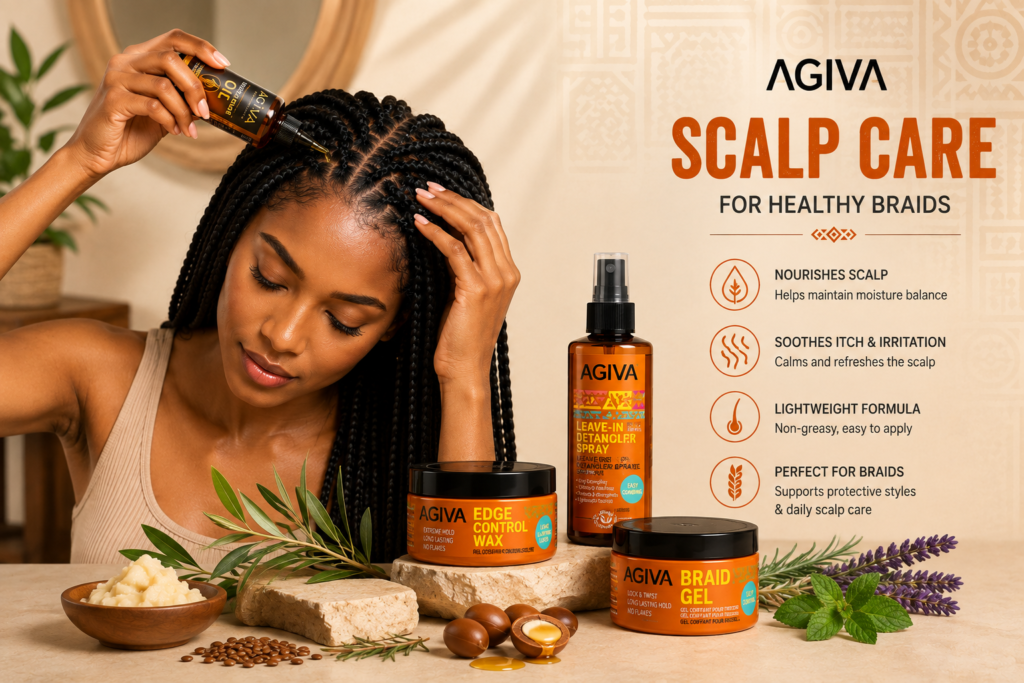
AGIVA Braid & Scalp Oil is designed to moisturize and nourish the scalp with a lightweight formula, helping improve comfort while wearing braids, twists, or locs.
Not sure how much moisture your protective style needs? Read our guide on
How to Moisturize Braids Without Product Build-Up.
2. Keep Your Hair Fresh Without Build-Up
Too much product can clog the scalp and increase irritation. Using lightweight leave-in products helps maintain moisture while keeping protective hairstyles feeling fresh.
AGIVA Leave-In Detangler Spray helps hydrate the hair, reduce dryness, and improve manageability without weighing down your braids.
3. Reduce Frizz During Maintenance
Loose hairs and frizz often encourage people to restyle their braids too frequently, creating additional tension on the scalp. Keeping the hairstyle neat helps reduce unnecessary manipulation.
AGIVA Braid Gel provides strong yet flexible hold, helping refresh braid styles while maintaining a clean, natural finish.
Simple Daily Habits That Help Prevent Braid Itch
- Keep your scalp moisturized every few days.
- Avoid scratching the scalp with your nails.
- Sleep with a satin bonnet or silk scarf.
- Clean the scalp gently whenever necessary.
- Avoid applying excessive amounts of styling products.
- Choose lightweight formulas designed for protective hairstyles.
Healthy scalp care is one of the most important steps in maintaining protective hairstyles. For more professional maintenance tips, read our guide: How to Make Braids Last Longer.
Common Mistakes That Make Braid Itch Worse
Many people accidentally make scalp irritation worse by following incorrect hair care habits. Avoiding these common mistakes can help keep your scalp healthier and your protective hairstyle more comfortable.
1. Scratching Your Scalp Frequently
Although scratching may provide temporary relief, it can irritate the scalp even more and may lead to redness or minor skin damage. Instead, focus on moisturizing and soothing the scalp with lightweight products.
2. Applying Too Much Oil
Healthy scalp care does not mean using large amounts of oil. Excessive application can attract dust, increase product buildup, and make the scalp feel heavier. Apply only the amount needed to keep the scalp hydrated.
3. Ignoring Product Buildup
Sweat, styling products, and environmental impurities can accumulate over time. Keeping the scalp clean is an important part of preventing irritation while wearing braids.
4. Wearing Braids That Are Too Tight
Excessive tension places unnecessary stress on both the scalp and hair follicles. If your braids feel painful immediately after installation, speak with your stylist to avoid long-term discomfort and possible hair damage.
Professional Tips for a Healthy Scalp
- Moisturize your scalp regularly with lightweight products.
- Keep your scalp clean without over-washing.
- Avoid excessive tension when installing braids.
- Protect your braids while sleeping with a satin bonnet or silk scarf.
- Choose products specifically developed for protective hairstyles.
- Maintain a consistent scalp care routine instead of waiting for irritation to appear.
Frequently Asked Questions
Is it normal for braids to itch?
Mild itching during the first few days can happen, especially if the scalp is adjusting to a new protective hairstyle. Persistent itching, however, is often a sign that the scalp needs better hydration or care.
How often should I moisturize my scalp?
The ideal frequency depends on your scalp type and environment. Regular hydration with lightweight products helps maintain comfort without creating excessive buildup.
Can I wash my scalp while wearing braids?
Yes. Gentle scalp cleansing helps remove sweat, oil, and product buildup while supporting a healthier environment for your natural hair.
Which products help reduce itchy braids?
A healthy braid care routine may include a nourishing scalp oil, a lightweight leave-in spray, and professional styling products that minimize buildup while helping maintain protective hairstyles.
Conclusion
An itchy scalp does not have to be part of wearing braids. With proper hydration, gentle cleansing, and a consistent scalp care routine, you can enjoy protective hairstyles more comfortably while supporting healthier natural hair.
Choosing lightweight, professional-quality products and maintaining regular scalp care are simple steps that help reduce irritation, improve comfort, and keep your braids looking fresh for longer.
Want to keep your protective hairstyle looking its best? Explore our complete guide:
How to Make Braids Last Longer.
About AGIVA Professional
AGIVA Professional develops high-quality hair styling and personal care products for professionals and consumers around the world. The Afro Hair collection is designed to support Braids, Twists, and Locs with modern formulas that help maintain healthy hair, nourished scalps, and long-lasting protective hairstyles.