

The Everything Shower Routine: A Complete Head-to-Toe Self-Care Ritual
An everything shower is more than a quick wash. It is a complete self-care routine that brings together hair care, body cleansing, exfoliation, face care, moisturization, and finishing steps in one organized ritual.
The idea is not to use as many products as possible. A good everything shower is about choosing the right steps, using each product for its intended purpose, and creating a routine that feels complete without becoming unnecessarily complicated.
For some people, this type of routine may be occasional rather than daily. It can be used before an event, at the end of a long week, or simply when you want to give more time to hair, skin, and body care.
In this guide, we break down a practical head-to-toe everything shower routine, explain which steps should come first, and show how hair care, body exfoliation, face care, and moisturization can work together as one complete ritual.
What Is an Everything Shower?
An everything shower is a longer personal care routine that combines several grooming and beauty steps into one session. Instead of focusing only on cleansing, it may include hair washing and conditioning, body cleansing, exfoliation, face care, shaving or hair removal when appropriate, and moisturizing after the shower.
The exact routine can vary from one person to another. Some people may focus more on hair care, while others may prioritize exfoliation, body care, or face care.
The most effective approach is to build the routine around your actual needs rather than following every possible step simply because it is part of a trend.
Self-Care Tip
An everything shower does not have to include every product you own. Choose the steps that make sense for your hair, skin, and routine, and always follow the instructions of the individual products you use.
Step 1: Start with Hair Care
Beginning with hair care can make the rest of the routine easier, particularly if you plan to shampoo, condition, use a hair mask, or apply another rinse-out treatment.
Starting with the hair allows time for conditioning or treatment products to work while you continue with the other parts of your shower routine, provided the product instructions allow this.
Cleanse the Hair and Scalp
Use a shampoo that is appropriate for your hair and scalp needs, and apply it according to the product directions. Focus the cleansing step primarily on the scalp and roots rather than aggressively rubbing the full length of the hair.
Rinse thoroughly before moving on to conditioner or another appropriate treatment.
Follow with Conditioner or Hair Treatment
After shampooing, apply conditioner or another suitable rinse-out treatment according to the product instructions. Concentrate on the areas where your hair needs care and respect the recommended application time.
If you use a hair mask or more intensive treatment, avoid assuming that leaving it on longer than recommended will provide better results.
Step 2: Cleanse the Body
Once your hair care steps are underway or complete, move on to body cleansing. A suitable shower gel can help remove everyday impurities and create a clean base for the exfoliation and body care steps that follow.
Use a comfortable water temperature and avoid unnecessarily aggressive scrubbing. The goal is to cleanse the skin effectively while keeping the routine gentle and comfortable.
Make the Shower Step Part of the Ritual
An everything shower can also be about the experience. Choosing a shower gel with a scent you enjoy can make the routine feel more intentional without making it more complicated.
The fragrance and sensory experience can become part of the ritual, but the product should still be used according to its intended purpose and instructions.
Step 3: Exfoliate the Body When Appropriate
Body exfoliation can be included as an additional step when your skin and the product instructions make it appropriate. A body scrub is different from everyday cleansing and should not automatically be used every time you shower.
Apply the exfoliating product gently and avoid excessive pressure. Areas such as the legs, elbows, or knees may receive more attention, but aggressive scrubbing is not necessary.
Why Exfoliation Comes After Cleansing
Cleansing first creates a clean starting point before the exfoliating step. After exfoliation, rinse the product away thoroughly before continuing with the rest of your routine.
If your skin is already irritated, damaged, or otherwise unsuitable according to the product warnings, skip the exfoliation step and follow the guidance provided with the product.
Step 4: Add Face Care Separately
Face care should be treated as its own part of the routine because products designed for the body and face are not automatically interchangeable.
Depending on your routine, this may include gentle facial cleansing, an appropriate face scrub, or a face mask used according to its individual directions.
Face Scrub or Face Mask?
You do not necessarily need to use both in the same session. The right choice depends on your skin, the products you use, and their recommended frequency.
If you include a face scrub, use it gently and according to its directions. If you choose a face mask instead, respect the recommended application time and removal instructions.
Step 5: Include Hair Removal or Shaving When Needed
Hair removal can be another part of an everything shower routine, but it does not need to be included every time. Whether you shave or use another suitable hair removal method depends on your personal preferences, skin needs, and the instructions of the products you choose.
If hair removal is part of your routine, think about its position carefully. Avoid combining too many potentially intensive skin care steps on the same area without considering how your skin responds.
Exfoliation and Hair Removal in the Same Routine
Exfoliation and hair removal may both affect how the skin feels, so more is not necessarily better. Follow the instructions for each individual product and avoid aggressive exfoliation immediately around areas that are irritated or sensitive after hair removal.
AGISS offers different hair removal formats for different preferences and routines, including depilatory creams, wax strips, roll-on waxes, and other professional hair removal solutions.
Each format has its own application method, timing, precautions, and intended areas of use. Always follow the instructions provided with the specific product rather than applying one general method to every type of hair removal product.
Step 6: Rinse Thoroughly and Finish Your Shower
Before leaving the shower, make sure shampoo, conditioner, treatments, shower products, and any appropriate rinse-off care products have been removed according to their instructions.
A thorough final rinse helps complete the cleansing stage before you move into the post-shower portion of your self-care ritual.
When drying the body, avoid unnecessarily aggressive rubbing. Gently drying the skin can provide a more comfortable transition into the moisturizing steps that follow.
Step 7: Moisturize After the Shower
Your everything shower does not end when the water stops. Post-shower care is an important part of the ritual, particularly when your routine has included cleansing and exfoliation.
A body lotion can provide a simple moisturizing step and can be applied according to its instructions after drying the skin.
Turn Body Lotion into Part of the Ritual
Choosing a body lotion that complements the sensory experience of your shower can help connect the different stages of the routine.
For example, AGIVA Care & Beauty includes body care options such as Strawberry Body Lotion and Peach & Mango Body Lotion, allowing fragrance to become part of the overall self-care experience.
When paired with an appropriate body scrub from the same fragrance family, the cleansing, exfoliating, and moisturizing stages can feel like parts of one coordinated body care ritual rather than unrelated steps.
Step 8: Finish with Hair Care
After the shower, your hair may need additional care depending on its type, condition, and styling routine.
This may include an appropriate leave-in conditioner, detangling product, hair oil, or another finishing product designed for your hair needs.
Apply leave-in products according to their individual instructions, paying attention to the recommended amount and application area.
Do Not Confuse Hair Care with Styling
Hair care and hair styling can overlap, but they do not always serve the same purpose. Complete the care portion of your routine first, then move into styling products if you plan to create a finished hairstyle.
AGIVA offers different product categories across hair care and professional styling, making it possible to build a routine that moves from cleansing and care to the final styling stage.
The Complete Everything Shower Routine in the Right Order
When several products are involved, having a clear order can make an everything shower easier to follow. The exact routine may vary depending on your products and personal needs, but the following sequence provides a practical starting point.
| Order | Step | Purpose | AGIVA / AGISS Category |
|---|---|---|---|
| 1 | Hair Cleansing | Cleanse the hair and scalp | AGIVA Hair Care |
| 2 | Conditioning / Treatment | Add an appropriate hair care step | AGIVA Hair Care |
| 3 | Body Cleansing | Cleanse the body | AGIVA Shower Gels |
| 4 | Body Exfoliation | Add exfoliation when appropriate | AGIVA Body Scrubs |
| 5 | Face Care | Add appropriate facial care | AGIVA Face Scrubs / Clay Masks |
| 6 | Hair Removal | Remove unwanted hair when needed | AGISS Hair Removal |
| 7 | Body Moisturizing | Complete post-shower body care | AGIVA Body Lotions |
| 8 | Post-Shower Hair Care | Detangle, condition or finish | AGIVA Hair Care |
This sequence is not a strict rule. Product instructions, your hair and skin needs, and the type of hair removal or treatment being used should always determine whether a particular step belongs in your routine and where it should be placed.
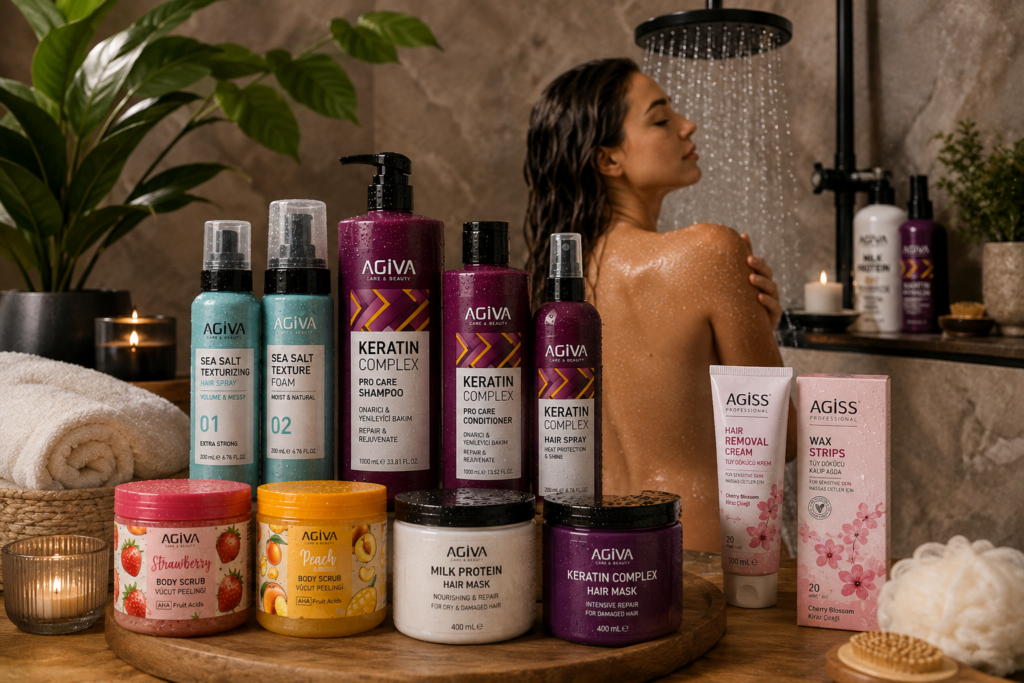
Building an Everything Shower with AGIVA
One of the advantages of a head-to-toe ritual is that different personal care categories can work together within the same routine. The AGIVA portfolio covers multiple stages of this experience, from hair care and shower products to exfoliation, face care, body moisturization, and professional hair styling.
Hair Care
Start with products suited to your hair needs. AGIVA hair care ranges include different shampoo, conditioner, mask, and treatment options designed for different care routines.
Shower and Body Care
AGIVA Shower Gels can form the cleansing stage, while AGIVA Body Scrubs can provide an additional exfoliating step when appropriate. After the shower, AGIVA Body Lotions can complete the body care routine with moisturization.
Face Care
AGIVA Face Scrubs and Clay Masks can be incorporated separately according to their intended use and recommended frequency. Facial products should always be treated according to their own instructions rather than used in the same way as body products.
Hair Removal
For those who include hair removal in their self-care ritual, AGISS provides a separate range of hair removal solutions in multiple formats. Choose the format that fits your routine and carefully follow its specific instructions and precautions.
Professional Styling
Once the care routine is complete and the hair is ready for styling, AGIVA Professional styling products can be used to create the desired finished look. Styling waxes, gels, sprays, powders, and other formats belong at the finishing stage rather than replacing the cleansing and care steps that come before them.
Common Everything Shower Mistakes
1. Trying to Use Every Product in One Shower
An everything shower is not a challenge to use every product in your bathroom. Select the steps that are actually appropriate for your hair, skin, and personal care needs.
2. Over-Exfoliating the Skin
Combining several intensive exfoliating steps can be unnecessary. Use face and body exfoliating products only as directed and remember that different areas of the skin may have different needs.
3. Using Body Products on the Face
Do not assume that a product intended for the body is automatically suitable for facial skin. Always check the intended application area.
4. Forgetting Post-Shower Care
The routine does not need to stop when you leave the shower. Appropriate body moisturization and post-shower hair care can help complete the head-to-toe ritual.
5. Making the Routine Too Complicated
A long routine is not automatically a better routine. The goal is to create an organized self-care ritual that you can enjoy and repeat when appropriate, rather than adding steps that serve no clear purpose.
How Often Should You Take an Everything Shower?
There is no fixed schedule that everyone needs to follow. An everything shower is generally more extensive than a regular shower, so it can be treated as an occasional self-care ritual rather than something that must be completed every day.
How often you include exfoliation, hair treatments, masks, hair removal, or other additional steps should depend on your individual needs and the instructions of the products you use.
Your regular showers can remain simple, while a more complete everything shower can be reserved for times when you want to dedicate additional attention to your hair, face, and body care.
Quick Everything Shower vs. Full Everything Shower
Not every self-care session needs to include the complete routine. Creating both a shorter and a more comprehensive version can make the ritual easier to adapt to your schedule.
Quick Everything Shower
A shorter routine might include hair cleansing, conditioning, body cleansing, and post-shower moisturization. It covers the essential care stages without adding every optional treatment.
Full Everything Shower
When you have more time, you may choose to add appropriate steps such as a hair treatment, body exfoliation, face care, hair removal, body lotion, and post-shower hair care.
The important difference is not simply the number of steps. A full routine should still be based on what your hair and skin actually need rather than adding products without a clear purpose.
Make It Your Own Ritual
Your everything shower can change from one session to another. Some days may focus on hair care, while others may include more body or face care. Build the ritual around what you need rather than trying to follow exactly the same sequence every time.
Frequently Asked Questions About Everything Showers
What is an everything shower?
An everything shower is an extended personal care routine that combines several hair, face, and body care steps into one organized session. It may include shampooing, conditioning, body cleansing, exfoliation, face care, hair removal, moisturization, and post-shower hair care.
What order should I do an everything shower in?
A practical order is to begin with hair cleansing and conditioning, continue with body cleansing, add exfoliation or face care when appropriate, complete any suitable hair removal steps, rinse thoroughly, and then move to post-shower moisturization and hair care. The instructions for individual products should always take priority.
Do I need to exfoliate during every everything shower?
No. Exfoliation is an additional care step and does not automatically need to be included every time. Follow the recommended frequency for the exfoliating product and consider the condition of your skin.
Should I wash my hair first or my body first?
Starting with hair care can be practical when you are using shampoo, conditioner, or rinse-out treatments. Once those steps are complete, you can continue with body cleansing and the rest of your routine.
Can an everything shower include hair removal?
Yes, hair removal can be included when appropriate. However, the correct method, timing, application area, and precautions depend on the specific hair removal product being used. Always follow its individual instructions.
What should I use after an everything shower?
Post-shower care can include an appropriate body lotion and hair care products suited to your needs. Once your hair care routine is complete, styling products can be added if you want to create a finished hairstyle.
How long should an everything shower take?
There is no required duration. A shorter routine may contain only the essential steps, while a more complete ritual can take longer because it includes additional treatments. Product application times should always follow the instructions provided with each product.
Turn Personal Care into a Complete Head-to-Toe Ritual
The everything shower is ultimately about creating an organized moment for personal care. Instead of treating shampoo, shower gel, exfoliation, face care, body lotion, and hair care as completely separate activities, they can become different stages of one coordinated routine.
That does not mean every stage needs to happen every time. A practical ritual changes according to your hair, skin, available time, and personal preferences.
Start with the essentials, add targeted care when appropriate, and finish with the products that help complete your post-shower routine. Keeping each step purposeful makes the experience easier to maintain and prevents an enjoyable self-care ritual from becoming unnecessarily complicated.
Across hair care, shower care, exfoliation, face care, body moisturization, hair removal, and professional styling, AGIVA and AGISS offer different product categories that can become part of a complete head-to-toe personal care routine.
Build Your Ritual with AGIVA
Explore AGIVA solutions for hair care, shower and body care, exfoliation, face care, moisturization, and professional styling, together with AGISS hair removal solutions for a more complete personal care portfolio.
For distributors, importers, wholesalers, and professional partners: bring AGIVA’s expanding personal care portfolio to your market. Become an AGIVA distributor and explore opportunities to grow with our international distribution network.