
Clean parts, controlled frizz, defined sections, and dependable hold can make a major difference in the finished appearance of a protective style. But with so many products available, choosing the best braid gel for braids is not always simple.
A formula that works well for cornrows may also be useful for twists or loc styling, but the amount, application technique, and desired finish can vary. The right braid gel should help provide control without making the hair unnecessarily stiff, overloaded, or difficult to manage.
In this guide, we explain what to look for in a braiding gel, how braid gel differs from edge control, and how to apply AGIVA Lock & Twist Braid Gel when creating cornrows, twists, braids, and other textured hairstyles.
What Is Braid Gel?
Braid gel is a styling product used during the installation or maintenance of braids, cornrows, twists, locs, and similar protective styles. It helps control loose strands, define sections, smooth the hair, and support a cleaner-looking finish.
Unlike a general styling gel, a dedicated braiding product should be practical for section-by-section application. The texture should allow the stylist to distribute a controlled amount without making it difficult to grip or manipulate the hair.
Braid gel may be used by professional braiders as well as people styling their hair at home. The final result, however, depends on the formula, the amount applied, the hair type, and the installation technique.
What Should You Look for in the Best Braid Gel for Braids?
No single product performs identically on every hair type or hairstyle. When comparing braid gels, focus on the characteristics that affect application, appearance, and maintenance.
1. Reliable Styling Control
A useful braid gel should help control loose strands while the hair is being sectioned, braided, or twisted. This can make parts appear cleaner and help the finished style look more defined.
The required level of control depends on the hairstyle. Detailed cornrows may require precise sectioning, while larger twists may need enough control to smooth the hair without removing its natural movement.
2. A Clean Finish
Visible flakes and heavy residue are common concerns when choosing products for braids. Although results can vary depending on application and the combination of products used, applying braid gel in small amounts can help reduce unnecessary buildup.
Avoid layering several gels, creams, oils, and leave-in products over the same section immediately. Product compatibility matters, and even a well-formulated gel can perform poorly when mixed with excessive amounts of other products.
3. Easy Distribution
A braid gel should be easy to spread across the section without requiring aggressive pulling. Controlled distribution is particularly important around the roots and along the hairline, where too much product can become more visible.
Begin with a small amount on the fingertips or comb, then add more only when the section requires additional control.
4. Suitability for Different Protective Styles
A versatile braid gel can be incorporated into several styling techniques, including:
- Box braids
- Knotless braids
- Cornrows
- Two-strand twists
- Flat twists
- Loc styling and retwisting
- Other sectioned protective hairstyles
The way the product is applied should always be adapted to the hairstyle, hair density, strand thickness, and desired finish.
5. Practical Use for Professionals and At-Home Styling
Professional braiders often work section by section for extended periods, so packaging, texture, and ease of application are important. At-home users also benefit from a product that can be applied in controlled amounts without requiring a complicated routine.
AGIVA Lock & Twist Braid Gel
AGIVA Lock & Twist Braid Gel is a 250 ml professional styling gel developed for braids, twists, and other structured hairstyles. It can be applied to clean, dry, or slightly damp hair before braiding or twisting.
The product is distributed through the selected section using the fingertips or a comb. After the desired braid or twist is completed, the hairstyle can be allowed to set naturally or placed under a hooded dryer when appropriate for the styling process.
Its section-by-section application makes it suitable for:
- Creating controlled, clearly defined parts
- Smoothing loose strands before braiding
- Supporting the shape of braids and twists
- Refreshing selected areas of an existing style
- Helping create a cleaner professional finish
How to Apply Braid Gel Step by Step
Step 1: Begin with Prepared Hair
Start with clean hair that has been gently detangled. Depending on the intended hairstyle, the hair may be dry or slightly damp. Avoid beginning with hair that is heavily coated in oil, cream, or old styling residue.
If the hair needs detangling before installation, use a suitable leave-in product and allow it to distribute before applying the gel. Read our guide on how to moisturize braids without product buildup to understand why controlled product application matters.
Step 2: Create a Clean Section
Separate the hair according to the intended braid or twist pattern. Clean sections help create a more organized result and make it easier to apply the gel only where it is required.
Step 3: Apply a Small Amount
Take a small amount of braid gel and spread it between the fingertips. Apply it around the section and along loose strands that require additional control.
Avoid covering the entire head with a heavy layer before beginning. Working one section at a time provides greater control over the amount used.
Step 4: Distribute the Product Evenly
Use your fingers or a suitable comb to distribute the product. The objective is to smooth the section rather than saturate it.
If the hair still requires more control, add another small amount. Gradual application is easier to manage than trying to remove excess gel from the hair.
Step 5: Braid, Twist, or Style
Complete the braid, cornrow, twist, or loc styling technique as desired. Maintain comfortable tension and avoid pulling the scalp excessively. Tight styling is not necessary for a neat result and may cause discomfort.
Step 6: Allow the Style to Set
Allow the finished hairstyle to set naturally or follow the professional styling method appropriate for the service. If a hooded dryer is used, select a suitable temperature and monitor the hair and scalp throughout the process.
Braid Gel vs. Edge Control: What Is the Difference?
Braid gel and edge control may appear similar, but each product has a different role in a textured-hair styling routine. The following comparison explains when and where to use each one.
| Comparison | Braid Gel | Edge Control |
|---|---|---|
| Primary Purpose | Helps control sections during braiding, twisting, cornrowing, and loc styling. | Helps smooth, shape, and define the hairline and baby hairs. |
| Application Area | Applied to individual sections, roots, loose strands, braids, twists, or locs. | Applied mainly around the edges, temples, and front hairline. |
| When to Apply | Used while constructing or refreshing the protective hairstyle. | Usually used as a finishing step after the main hairstyle is completed. |
| Best Used For | Box braids, knotless braids, cornrows, twists, and selected loc-styling techniques. | Sleek edges, shaped baby hairs, polished hairlines, and styling touch-ups. |
| Recommended Tool | Fingertips, sectioning comb, or styling comb. | Fingertips or a dedicated edge brush. |
In simple terms: braid gel is used primarily while constructing the hairstyle, whereas edge control is used to refine the hairline and complete the finished look.
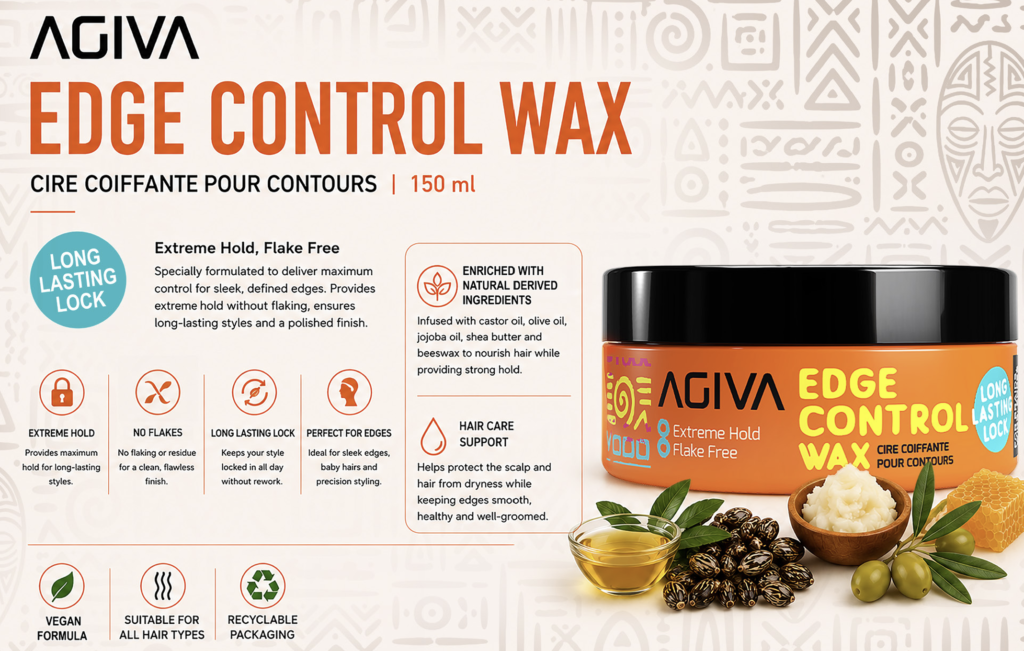
AGIVA Instant Lock Edge Control is applied in a small amount to clean, dry, or slightly damp edges. Smooth it with your fingertips or an edge brush, shape the hairline as desired, and allow the product to set.
Both products can be used in the same styling routine. Apply AGIVA Lock & Twist Braid Gel while creating the braids or twists, then use AGIVA Instant Lock Edge Control around the hairline as the finishing step. Avoid excessive application or unnecessary product layering.
The two products can be used within the same styling routine, but they should not be applied excessively or treated as interchangeable in every situation.
Which Hairstyles Can Be Created with Braid Gel?
Cornrows
For cornrows, braid gel can help control loose strands around each part and support a more defined pattern. Apply a small amount to each section immediately before braiding rather than covering the full scalp in advance.
Box Braids and Knotless Braids
During box braid or knotless braid installation, the gel can help organize the base of each section. Careful application is especially important because excessive product around the roots may become visible as the style is worn.
Twists
For two-strand or flat twists, braid gel may help smooth the section and support definition. The quantity should be adapted to the thickness and density of the hair.
Loc Styling and Retwisting
When used for loc styling, apply a controlled amount around the selected roots and distribute it evenly before completing the technique. Product needs vary between mature locs, starter locs, and different retwisting methods.
When in doubt, consult an experienced loctician or textured-hair professional who can evaluate the hair and scalp directly.
How to Prevent Flaking and Product Buildup
Flaking is not always caused by the gel alone. It may also result from using too much product, layering incompatible formulas, applying gel over existing buildup, or repeatedly adding more product without cleansing the hair.
To support a cleaner-looking finish:
- Begin with clean or properly prepared hair.
- Apply a small amount to one section at a time.
- Avoid mixing multiple styling gels on the same section.
- Do not apply heavy oil immediately before the gel.
- Allow leave-in products to distribute before styling.
- Use additional gel only where more control is needed.
- Keep the container closed between applications.
- Clean the scalp and hair when buildup becomes visible.
Maintaining balance is important throughout the life of the hairstyle. For additional maintenance advice, read how to make braids last longer.
Do Braids Still Need Scalp Care?
Yes. A neat hairstyle does not replace regular scalp care. Dryness, sweat, tension, and accumulated products can affect comfort while wearing braids, twists, cornrows, or loc styles.
Apply scalp products directly and in controlled amounts rather than coating the entire hairstyle. If itching becomes persistent, severe, or is accompanied by visible irritation, remove unnecessary tension and consult an appropriate healthcare professional.
For practical maintenance guidance, see our article about how to stop itchy braids and care for the scalp.
Common Braid Gel Mistakes
- Applying too much gel before sectioning the hair
- Using gel over a scalp with visible product buildup
- Combining several styling products without checking compatibility
- Using excessive tension to make the hairstyle appear neater
- Applying edge control across the entire hairstyle as though it were braid gel
- Adding more gel every day without cleansing when necessary
- Leaving the product container open during a long styling session
Frequently Asked Questions
What is the best braid gel for braids?
The best braid gel depends on the hairstyle, hair texture, desired level of control, application technique, and preferred finish. Look for a formula that distributes easily, supports clean sectioning, and can be applied in controlled amounts.
Can braid gel be used for cornrows?
Yes. Braid gel can be applied section by section to help control loose strands and create more defined cornrow patterns. Avoid applying an unnecessarily heavy layer across the entire scalp.
Can I use braid gel for twists?
Yes. It can help smooth and define sections for two-strand twists and flat twists. Adjust the amount according to the hair’s thickness, density, and condition.
Can braid gel be used on locs?
Braid gel may be incorporated into certain loc styling or retwisting techniques. Product quantity and technique should be adapted to the type and maturity of the locs.
Is braid gel the same as edge control?
No. Braid gel is primarily used during braiding, twisting, or loc styling. Edge control is mainly designed to smooth and shape the hairline and baby hairs.
Why does braid gel sometimes flake?
Possible causes include excessive application, mixing incompatible products, applying gel over existing buildup, or repeatedly layering products without cleansing. Begin with a small amount and apply more only when needed.
Discover the AGIVA Braid Ritual
Choosing the best braid gel for braids means considering more than hold alone. Application control, section definition, product quantity, scalp comfort, and the complete maintenance routine all influence the finished hairstyle.
Explore the AGIVA Afro Hair Care collection, including Lock & Twist Braid Gel, Instant Lock Edge Control, Anti-Itch Braid Oil, and Leave-In Detangler Spray for braids, twists, locs, edges, and textured-hair routines.
Professional braiders, salons, beauty supply stores, importers, wholesalers, and distributors can learn more about introducing the AGIVA Braid Ritual collection to their markets through AGIVA’s international distribution network. Contact AGIVA for product, wholesale, and distribution information.